
It Takes a Village: Community and Good Human Conduct
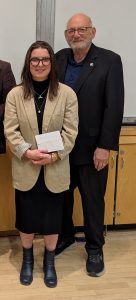
Mia Mackenzie
2026 Irving and Jeanne Glovin Award winner
It Takes a Village: Community and Good Human Conduct
What does it mean to engage in good human conduct in 2026? In an increasingly divided, nuanced, and isolated society, the subjective concept of what is ‘good’ is difficult to capture (FeldmanHall et al., 2018). Nonetheless, mental health struggles, loneliness, violent extremism and hate, climate catastrophes, and international conflicts continue to become more and more commonplace (Fuller-Rowell et al., 2025; Moitra et al., 2023). Thus, beginning to answer this question is crucial. Research has demonstrated that the impacts of community association – that is, the degree to which individuals feel tied to and accepted by their communities – is associated with many protective factors and positive outcomes (Kim et al., 2020; Miller et al., 2020).
Historically, community has been defined differently, depending on who is asked (Cobigo et al., 2016). Despite these myriad definitions, there are several common themes that emerge, such as physical proximity, relationships, support, belonging, sharing, sustained, groups, among a few others (Cobigo et al., 2016). Based on this research, community, in this context, can be understood as an intentional form of collective life marked by dense relationships, mutual care and respect, and shared responsibility for fostering good human conduct across generations (Etzioni, 2024). Further, good human conduct – for the purposes of this paper – refers to everyday conduct grounded in respect for dignity, acceptance of difference, mutual responsibility, and a refusal to harm others when that harm can be avoided. Thus, the act of engaging in and fostering community can be understood to be a mechanism to learn and practice good human conduct. This is because community as defined in this way, with its emphasis on relationality, care, and respect necessitates an appreciation for dignity, difference, and kindness.
These themes are central to the arguments being made here because, if community provides a foundation for good human conduct, the question becomes; how can we as humans work to build positive, healthy communities? After all, in contemporary Western societies marked by fragmentation, inequality, and isolation, reclaiming community as a relational, interdependent form of relationship offers a powerful context for cultivating respect, acceptance, and good human conduct (Barrett, 2015; Fuller-Rowell et al., 2025; Lee & Han, 2024). Drawing on Indigenous concepts of community and responsibility, theories of social learning, and research on the impact of community, this paper will highlight why community is crucial to promoting good human conduct in the contemporary moment, provide some practical approaches to practicing community, and it will offer critical reflections and considerations to be made when approaching community as a machine of good human conduct.
The Erosion of Community in 2026
Any account of good human conduct in 2026 must confront the social conditions that make dignity fragile, trust precarious, and which undermine healthy and ethical community. Recent years have seen a dramatic rise in instances of hate speech and hateful discourses from individuals, institutions, and governments (Madhu, 2025; United Nations, 2023). Indeed, research has demonstrated spikes in racist, antisemitic, homophobic, and transphobic content online (Cohen, 2025; Hickey et al., 2025). Further, political polarization has become deeper entrenched in everyday life (Holliday et al., 2024; McMurtrie et al., 2025). Ultimately, this shapes who people trust, where they get information, and even with whom they are willing to live, work, or socialize (Iyengar et al., 2019; Steppat et al., 2022; Thurner et al., 2025). To complicate matters further, rapid advances in artificial intelligence have amplified the production and circulation of disinformation and misinformation, undermining citizens’ ability to know what is true and what has been fabricated (Groh et al., 2024; Robins-Early, 2024). Together, these dynamics are deeply tied to the digital age in which we find ourselves and have profound implications for how people relate to one another. Additionally, these dynamics eat away at everyday relationships, trust, and shared norms, all of which are central to the idea of community.
In recent years, hate speech has grown in visibility, intensified, and become normalized (Windisch et al., 2022). For example, through the most recent US and Canadian federal elections, racist, homophobic, transphobic, and Islamophobic comments were front and center while oppressive policies were explicitly outlined political parties’ platforms (Pauly & Szilagy, 2024; SPLC, 2025). These harmful discourses no longer exist in subjugated or fringe spaces, but have taken center stage, often coming directly from the mouths of mainstream public figures (Sakki & Martikainen, 2021). Above and beyond this, algorithmic systems on social media are designed to maximize usage and engagement, resulting in polarizing and emotionally charged content being amplified for individuals whose views align with that content (Bustamante, 2022). Examples of this can be seen in the rise of the internet ‘manosphere’, with prominent online influencers at the center of this group (Haslop et al., 2024). This section of the internet claims to address men’s struggles, while representing men as victims of the current sociopolitical climate and it has been implicated in the normalization of violence and misogyny against women and girls (Haslop et al., 2024).
Altogether, hate speech is not merely offensive language but instead a public performance of whose safety and dignity are negotiable, and whose are not. Essentially, it allows for good human conduct to only be applicable to those whose dignity is not negotiated, thereby undermining the very foundation of community and good human conduct as they’ve been defined thus far. Hate speech reshapes moral boundaries in society and has profound impacts on individuals and communities. These developments do more than increase incivility; they erode the relational conditions under which moral learning occurs. When dignity is publicly debated, children and adults alike are propelled into a fractured moral and social landscape where exclusion appears ordinary rather than abnormal. Thus hate speech not only harms people’s inner lives, but it also constrains their freedom to move, speak, and be present in community, essentially cutting to the heart of good human conduct. When public hostility becomes normalized, it is much harder for people to enact everyday respect and acceptance in the ordinary spaces of life. Children and youth who regularly witness unchecked hate learn, implicitly, that some lives are less worthy of care than others (Bigler & Liben, 2006; Schultner et al., 2006).
At the same time, it is important to note that hate can itself organize a form of belonging. Online hate groups and forums often give members a strong sense of identity, recognition, and purpose, held together by shared enemies and narratives of victimization (Valenzuela Saavedra, 2024). In this sense, they resemble community in their density of relationships and shared stories but invert its ethical core. Where community builds solidarity through shared responsibility and mutual care, hate based communities build solidarity through exclusion and dehumanization (Bilewicz & Soral, 2020). The question, then, is not whether people will seek community, but what kind of community they will create and to what ethical ends?
Relatedly, political polarization and epistemic mistrust and instability act individually and in conjunction with each other to further undermine healthy and ethical community. Epistemic mistrust and instability refer to states that individuals may experience where they are unable or unwilling to trust sources of information due to fluctuating certainty regarding what is true (Li et al., 2023). Political polarization refers to the widening ideological distance between political parties (McMurtrie et al., 2025), Research has shown that individuals express discomfort or hostility towards others with opposing political views (Christ et al., 2014; Wagner, 2021). This hostility allows for political identity to become a social identity that constrains relationships and community membership (Christ et al., 2014; Fangmeier et al., 2020; Wagner, 2021). This polarization is both ideological and emotional. Above and beyond being perceived as untrustworthy, members of the opposing political parties are often viewed as immoral, dangerous, and untrustworthy (Iyengar & Westwood, 2015; Saul, 2022). This kind of moral condemnation makes compromise with the other parties synonymous with betrayal, rather than dialogue. People may respond by choosing to live, work, or engage in ideologically homogeneous spaces where they expect less friction, thereby reducing opportunities for cross cutting community (Iyengar & Westwood, 2015; Saul, 2022). Children and youth watch adults treat disagreement as grounds for avoidance or contempt, which undermines any modelling of respectful, constructive conflict (McLeod, 2025).
Epistemic mistrust and instability deepens these patterns. Generative artificial intelligence (AI) tools now allow highly convincing text, images, audio, and videos to be produced with minimal effort (Groh et al., 2024). As a result, many people are unsure whether what they see online is authentic and experience anxiety, confusion, and a kind of epistemic fatigue in which discerning the truth feels impossible (Groh et al., 2024). Different groups come to inhabit distinct information worlds with their own perceived facts and authorities, making cooperation on shared problems extremely difficult because people disagree not only about solutions but also about what is real.
Taken together, polarization and epistemic instability cut directly against the conditions required for healthy and ethical community. Community presupposes that people who share physical or relational proximity, such as neighbours, classmates, or colleagues, understand themselves as mutually responsible for one another’s wellbeing. It requires that disagreements be navigated through dialogue, repair, and accountability rather than expulsion or contempt (Ognyanova et al., 2020). Hate speech normalizes dehumanization (Pluta et al., 2023). Polarization narrows the circle of care and fractures common life (Iyengar et al., 2019). AI‑driven misinformation erodes shared reality and trust (Lewandowsky et al., 2023). Together, these facets compound and weaken the conditions under which community and good human conduct can flourish. They produce transactional, thin, or hostile relationships and communities which are organized around exclusion.
In light of these dynamics, ethical community is inherently counter cultural. It calls for the intentional building of relationships and shared responsibilities across lines that are currently treated as reasons to withdraw, attack, or simply log off. As fundamentally relational and social beings, much of human learning is done in social environments in community. Children learn from those around them, making moral learning a social phenomenon that must be done in the context of healthy ethical communities. Ultimately, dignity requires recognition and recognition, in turn, requires community. Therefore, the dignity afforded through engaging in good human conduct can be understood to be learned through healthy, ethical communities. This sets the stage for thinking about community not only as a nostalgic metaphor but as a concrete practice that can soften polarization and rebuild trust at the level of everyday life.
Community and Good Human Conduct in the Contemporary Moment
The concept of community offers a way to reimagine how good human conduct is learned and practiced in relationships, not just as an individual trait. While the concept of what constitutes ‘good’ is highly subjective and deeply entrenched in epistemic power dynamics, this paper defines ‘good’ human conduct as: Everyday conduct grounded in respect for dignity, acceptance of difference, mutual responsibility, and a refusal to harm others when that harm can be avoided. This goes beyond individual kindness and includes solidarity and allyship, a willingness to challenge injustice, and a sense of responsibility for, and accountability towards collective wellbeing.
This is deeply intertwined with the concept of community, which is characterized by meaningful and ongoing relationships, mutual obligation and accountability, norms of inclusion and respect, and intergenerational connection (Small & Supple, 2001). Importantly, community is not a romantic return to ‘traditional’ ways of life, but a critical, ethical project for the contemporary moment. It is not just a metaphor or an ideal. Community is grounded in existing theoretical and relational traditions that situate humans as fundamentally embedded in webs of relationship (Small & Supple, 2001). While there are numerous theories that could be applied here, this paper will focus on ecological models and concepts of social learning, which outline how community and relationships impact people’s development and learning (Bronfenbrenner, 1992; McLeod, 2025). Further, principles of traditional Indigenous worldviews can be extrapolated and applied to answer the question; what do we owe to each other, and why does that matter (Atleo & Boron, 2022; Celidwen & Keltner, 2023)? Finally, contemporary mutual aid efforts and the principles which underlie them can provide tangible approaches and exemplify what community and good human conduct look like in action (Kenworthy et al., 2023; Littman et al., 2022).
Bronfenbrenner’s ecological model (1992) theorizes that human development is impacted by five nested, interrelated, and interactive environmental systems (Bronfenbrenner, 1992). The five systems range from most proximal and immediate to the individual to most broad (Bronfenbrenner, 1992). The most proximal is the microsystem is the most direct environment and includes bidirectional relationships with the family, school, peers, and neighbourhood (Bronfenbrenner, 1992). The next most proximal is the mesosystem, which represents connections between the microsystem (e.g. relationships between the neighbours and the family) (Bronfenbrenner, 1992). Then there is the exosystem, which represents settings that influence an individual indirectly such as government policies (Bronfenbrenner, 1992). Next is the macrosystem which includes the overarching cultural context and encapsulates societal values, laws, and economic systems (Bronfenbrenner, 1992). Finally, there is the chronosystem which addresses the dimension of time and includes changes in family structure, life transitions, and other significant events in an individual’s life (Bronfenbrenner, 1992). Bronfenbrenner argues that proximal processes –sustained, reciprocal interactions and relationships over time – often act as the primary influence on individual development and learning (Bronfenbrenner, 1992).
This theory offers an entry point to understanding the role of community in fostering good human conduct. Specifically, community can be understood to be a sort of ecological project insofar as it seeks to strengthen microsystems and the connections between them (thereby supporting the mesosystem) (Bronfenbrenner, 1992). In emphasizing the shared connections between individuals in the ecosystem, community promotes consistency of values across contexts (e.g. at home, at school, at work, etc.) (Bronfenbrenner, 1992). Meaning, by improving and expanding an individual’s micro- and mesosystems through the fostering and development of community, we can promote shared norms and expectations around care, accountability, and inclusion which creates a positive, self-sustaining circle of care across the diverse communities that individuals belong to (Bronfenbrenner, 1992).
Another underlying foundation of community can be understood through traditional Indigenous worldviews. Central to this is the idea that people, land, ancestors, and life are all interconnected to each other (Celidwen & Keltner, 2023). Relatedly, there is a shared responsibility for childcare that is spread across networks of kinship wherein each person occupies a specific role and responsibility (Celidwen & Keltner, 2023; Wabano Health Centre, 2017). The Wabano Health Center outlines traditional Life Cycle Teachings which associate each stage of life with a specific role and responsibility (Wabano Health Centre, 2017). For example, the infant is seen as being responsible for bringing joy, whereas elders are responsible for providing spiritual guidance and wisdom (Wabano Health Centre, 2017).
These teachings highlight how belonging, reciprocity, and interdependence factor into healthy and ethical community (Celidwen & Keltner, 2023; Wabano Health Centre, 2017). Wellbeing is understood as reciprocal, where caring for others and the land, and contributing to community is integral to an individual’s development (Celidwen & Keltner, 2023; Wabano Health Centre, 2017). Taken together, ethical conduct in community under traditional Indigenous worldviews is related to one’s responsibility to others, ancestors, future generations, and to the land (Atleo & Boron, 2022; Celidwen & Keltner, 2023; Wabano Health Centre, 2017). Actions can be evaluated in terms of how they affect relationships and balance within the community (Atleo & Boron, 2022 Wabano Health Centre, 2017). These teachings point toward a vision of community where good human conduct is understood less as an individual virtue and more as an ongoing, shared responsibility to sustain positive relationships within and beyond the community (Atleo & Boron, 2022; Celidwen & Keltner, 2023
Before moving on, we must first acknowledge the profound colonial harms that have impacted these relationships and worldviews. Much of the settler colonial project in Canada functioned to intentionally degrade Indigenous communities and relationships (Blackstock, 2009). As it is authored by a non-Indigenous settler, there are limits to the assertions that this paper can claim to make. Instead, information on traditional Indigenous knowledge and worldviews is provided above is intended only to be illustrative, not extractive.
A final contemporary expression of community can be seen in the rise of mutual aid. Mutual aid refers to practices where community members come together to share resources, skills, and care in ways that recognize their interdependence rather than reproducing a divide between “helpers” and “the helped” (Kenworthy et al., 2023; Littman et al., 2022). These efforts often emerge in response to crisis or systemic neglect (e.g. COVID‑19 pandemic, climate‑related disasters, or ongoing housing and food insecurity) (Kenworthy et al., 2023; Littman et al., 2022). In these contexts, neighbours organize grocery deliveries, rent support, childcare swaps, or transportation networks, not as acts of charity but as expressions of shared responsibility and solidarity (Kenworthy et al., 2023; Littman et al., 2022). Mutual aid therefore embodies an understanding of good human conduct as collective and relational. People act on the assumption that our own wellbeing is bound up with the wellbeing of those around us, and that care should circulate horizontally within the community, not trickle down from distant institutions (Kenworthy et al., 2023).
Together, ecological models, social learning, mutual aid, and perspective gained from traditional Indigenous worldview help to situate the benefit of community as a mechanism towards good human conduct. Social learning theories and Bronfenbrenner’s ecological model outline how community members are essential to promoting good human conduct via shared modelling of good conduct that centers respect for dignity, acceptance of difference, mutual responsibility, and a refusal to harm others (Bronfenbrenner, 1992; McLeod, 2025). Mutual aid provides an example of how these communities can engage when they are functioning at their best (Kenworthy et al., 2023; Littman et al., 2022). An Indigenous worldview provides a framework to understand not only what we owe to each other, but to our environment (Atleo & Boron, 2022; Celidwen & Keltner, 2023). This kind of reciprocity and accountability is central to ethical and healthy communities.
Fostering Community: Ways Forward
The question then becomes: How do we leverage the theories and frameworks outlined thus far to address the erosion of community that we see in contemporary society? Wraparound educational supports and initiative provides a potential path forward to answer this question. Education is not only about schooling, but includes families, communities, professional training, and digital environments, and services or strategies must be developed with this in mind (Crick et al., 2007) Educational strategies that aim to foster community must: (a) center relationships, (b) cultivate ethical responsibility and accountability, and (c) attend to power and structural injustice (Crick et al., 2007).
According to Bronfenbrenner’s ecological theory and social learning principles, children learn through everyday interactions (proximal processes) that children are a part of (Bronfenbrenner, 1992; Crick et al., 2007; McLeod, 2025). As such, classrooms and environments can centre care, responsibility, and repair to help children learn about good human conduct. For example, weekly community circles could invite students to share feelings, appreciations, and concerns, using norms such as one person speaking at a time, attentive listening, and the right to pass (Collins, 2013). This can help children to learn about, and practice, the principles which underscore good human conduct (e.g. respect for dignity, emotional literacy, etc.). Collaborative learning can be organized so that roles like facilitator, note‑taker, encourager, and time‑keeper rotate among group members, and are then followed by debriefs on how they worked together in order to connect academic work directly to practices of cooperation, fairness, and recognition (Collins, 2013).
When harm occurs, adults and educators can involve children in deciding reparative actions so that accountability is modelled without humiliation or expulsion from the community (Bronfenbrenner, 1992; Crick et al., 2007; McLeod, 2025). Classroom responsibilities (e.g. caring for plants) can be framed as meaningful contributions to the community rather than rewards for good behaviour. Children can also engage in projects that incorporate other community members (e.g. parents, grandparents, coaches, etc.) to promote wraparound social and community support around the child, and to provide ample opportunities for social learning (McLeod, 2025). Together, these practices support children to form attachments to peers and adults beyond the home, to develop early conflict‑resolution skills and empathy, and to see themselves as people who both receive and provide care within a broader ethical community.
During adolescence, community requires creating spaces where young people understand how they are both shaped by, and are active in shaping, community. Teenagers are actively forming identities and testing norms, so they need opportunities to exercise agency in ways that are accountable to others (Branje, 2022). Youth‑led mutual aid and social action projects are one concrete strategy to do so. Students can be empowered to identify local issues and to design responses with time, guidance, support, and resources from adults and other community members. Reflection pieces can ask students to connect their projects to concepts such as responsibility, solidarity, and structural inequality so that action and critical analysis develop together. Peer mediation and restorative programs further cultivate ethical agency by training students to facilitate dialogue in conflicts and participate in restorative circles when harm occurs (Malorni et al., 2022). These processes help emphasize that maintaining community requires healthy conflict management and accountability (Malorni et al., 2022).
Professional programs (e.g. social work; education) play a crucial role as these students represent future community builders. Because social workers and teachers often act as brokers between individuals and larger organizations, governments, and groups, their education should prepare them to build community. Community-engaged coursework can require collaboration with local organizations, emphasizing relationship-building, reciprocity, and ongoing reflections on power. Classroom pedagogy can mirror these commitments through discussions, co-created dialogue norms, balanced peer feedback, and reflective exercises that map networks of support and exclusion. Further, opportunities to facilitate groups or circles build practical skills in connection, conflict repair, and community building. Graduates formed in this way are more likely to carry a community-centered orientation into agencies, schools, and policy spaces, advocating for family-centred practice, community hubs, and participatory decision-making.
Finally, educational strategies must extend into digital life, reflecting a recognition that online spaces are now important parts of people’s social worlds. Treating online life as community means integrating digital literacy and ethics across ages, including lessons on how algorithms surface content, and how this is implicated in hate speech and polarization (Iyengar & Westwood, 2015; Pluta et al., 2023; Windisch et al., 2022). Projects that use digital tools to support local initiatives, such as neighbourhood clean‑ups or awareness campaigns, create links between online organizing and offline care and prompt reflection on how digital practices can strengthen or weaken trust, accountability, and community. Workshops or resources for caregivers, and intergenerational conversations about how people decide what and whom to trust, can further reinforce that digital conduct is part of the shared moral life of the community.
Across these developmental stages and contexts, learning environments are set up to behave like communities where individuals are known, needed, and accountable. These strategies are not intended to be one-off approaches, but frameworks that can be used to set up classrooms and education practice. In this way, good human conduct is learned experientially through relationships and shared projects.
Where Do We Go From Here?
Although this essay has emphasized that ideas of “good” are historically and politically situated, it does not conclude that shared ethical ground is impossible. Rather, it proposes a thin universality organised around dignity and non‑harm (Barrett, 2015; Cobigo et al., 2016). Across diverse traditions, there is broad agreement that people should not be deliberately dehumanized, and that children in particular should grow up in relationships where they are safe, cared for, and able to participate in community life (Cobigo et al., 2016). Thus, good human conduct is not a fixed list of rules but a commitment to treat others with dignity, to refuse gratuitous harm, and to repair relationships when harm occurs. Further, what can be shared across cultures is not a single moral code, but the expectation that communities hold themselves accountable for how they treat their members. Community offers a way of enacting this minimal universality in practice: it does not demand identical cultural norms, but it insists that no one is outside the circle of concern and that hate, targeted cruelty, and abandonment are incompatible with ethical community.
Finally, any argument for community as a mechanism to good human conduct must grapple with the fact that communities can do, and have done, harm. Tight knit groups can enforce conformity, punish dissent, or engage in forms of “looking out for each other” that are experienced as surveillance rather than care. An ethical vision of community must therefore centre consent and boundaries, not only cohesion. It requires explicit protections for conflicting voices and for those at the margins, including clear agreements about acceptable behaviour, restorative responses to conflict, and strong connections to rights protections and supports that exist beyond the community itself.
What does it mean to engage in good human conduct in 2026? This paper has argued that any serious answer must take account of the ways hate speech, political polarization, and epistemic instability have eroded the conditions under which community can flourish. In this landscape, community names a countercultural commitment to dense relationships, mutual care, and shared responsibility across generations, grounded in a thin but vital universality. It represents a belief that all people, and especially all children, are entitled to dignity, non‑dehumanization, and opportunities to live in communities where harm is addressed rather than ignored. Essentially, this vision of community asks us not to do unto others what we would not have them do unto us, and to organize our shared lives so that this commitment is woven into our everyday practices. Good human conduct, then, is an ongoing practice of sustaining relationships, refusing harm, and working to repair what has been broken.
References
Atleo, C., & Boron, J. (2022). Land Is Life: Indigenous Relationships to Territory and Navigating Settler Colonial Property Regimes in Canada. Land, 11(5), 609. https://doi.org/10.3390/land11050609
Barrett, G. (2015). Deconstructing Community. Sociologia Ruralis, 55(2), 182–204. https://doi.org/10.1111/soru.12057
Bigler, R. S., & Liben, L. S. (2006). A developmental intergroup theory of social stereotypes and prejudice. Advances in Child Development and Behavior, 34, 39–89. https://doi.org/10.1016/s0065-2407(06)80004-2
Bilewicz, M., & Soral, W. (2020). Hate Speech Epidemic. The Dynamic Effects of Derogatory Language on Intergroup Relations and Political Radicalization. Advances in Political Psychology, 41, 3–33. https://doi.org/10.1111/pops.12670Digital%20Object%20Identifier%20(DOI)
Blackstock, C. (2009). The Occasional Evil of Angels: Learning from the Experiences of Aboriginal Peoples and Social Work. First Peoples Child & Family Review, 4(1), 28–37. https://doi.org/10.7202/1069347ar
Branje, S. (2022). Adolescent identity development in context. Current Opinion in Psychology, 45, 101286. https://doi.org/10.1016/j.copsyc.2021.11.006
Bronfenbrenner, U. (1992). Ecological systems theory (1992). In Making human beings human: Bioecological perspectives on human development (pp. 106–173). Sage Publications Ltd.
Bustamante, C. M. V. (2022, August 25). Technology Primer: Social Media Recommendation Algorithms. The Belfer Center for Science and International Affairs. https://www.belfercenter.org/publication/technology-primer-social-media-recommendation-algorithms
Celidwen, Y., & Keltner, D. (2023). Kin relationality and ecological belonging: A cultural psychology of Indigenous transcendence. Frontiers in Psychology, 14, 994508. https://doi.org/10.3389/fpsyg.2023.994508
Christ, O., Schmid, K., Lolliot, S., Swart, H., Stolle, D., Tausch, N., Al Ramiah, A., Wagner, U., Vertovec, S., & Hewstone, M. (2014). Contextual effect of positive intergroup contact on outgroup prejudice. Proceedings of the National Academy of Sciences of the United States of America, 111(11), 3996–4000. https://doi.org/10.1073/pnas.1320901111
Cobigo, V., Martin, L., & Mcheimech, R. (2016). Understanding Community. Canadian Journal of Disability Studies, 5(4), 181–203. https://doi.org/10.15353/cjds.v5i4.318
Cohen, J. (2025). A Platform Problem: Hate Speech and Bots Still Thriving on X. USC Viterbi | School of Engineering. https://viterbischool.usc.edu/news/2025/02/a-platform-problem-hate-speech-and-bots-still-thriving-on-x/
Collins, B. (2013). Empowerment of children through circle time: Myth or reality? Irish Educational Studies, 32(4), 421–436. https://doi.org/10.1080/03323315.2013.854459
Crick, R. D., McCombs, B., Haddon, A., Broadfoot, P., & Tew, M. (2007). The ecology of learning: Factors contributing to learner‐centred classroom cultures. 267–307. https://doi-org.ezproxy.library.dal.ca/10.1080/02671520701497555
Fangmeier, T. L., Stanley, S. M., Knopp, K., & Rhoades, G. K. (2020). Political Party Identification and Romantic Relationship Quality. Couple & Family Psychology, 9(3), 167–180. https://doi.org/10.1037/cfp0000141
FeldmanHall, O., Son, J.-Y., & Heffner, J. (2018). Norms and the Flexibility of Moral Action. Personality Neuroscience, 1, e15. https://doi.org/10.1017/pen.2018.13
Fuller-Rowell, T. E., Sultana, S., & Kawachi, I. (2025a). Global Trends and Disparities in Social Isolation. JAMA Network Open, 8(9), e2532008. https://doi.org/10.1001/jamanetworkopen.2025.32008
Fuller-Rowell, T. E., Sultana, S., & Kawachi, I. (2025b). Global Trends and Disparities in Social Isolation. JAMA Network Open, 8(9), e2532008. https://doi.org/10.1001/jamanetworkopen.2025.32008
Groh, M., Sankaranarayanan, A., Singh, N., Kim, D. Y., Lippman, A., & Picard, R. (2024). Human detection of political speech deepfakes across transcripts, audio, and video. Nature Communications, 15, 7629. https://doi.org/10.1038/s41467-024-51998-z
Haslop, C., Ringrose, J., Cambazoglu, I., & Milne, B. (2024). Mainstreaming the Manosphere’s Misogyny Through Affective Homosocial Currencies: Exploring How Teen Boys Navigate the Andrew Tate Effect. Social Media + Society, 10(1), 20563051241228811. https://doi.org/10.1177/20563051241228811
Hickey, D., Fessler, D. M. T., Lerman, K., & Burghardt, K. (2025). X under Musk’s leadership: Substantial hate and no reduction in inauthentic activity. PLOS ONE, 20(2), e0313293. https://doi.org/10.1371/journal.pone.0313293
Holliday, D. E., Lelkes, Y., & Westwood, S. J. (2024). Affective polarization is uniformly distributed across American States. PNAS Nexus, 3(10), pgae310. https://doi.org/10.1093/pnasnexus/pgae310
Iyengar, S., Lelkes, Y., Levendusky, M., Malhotra, N., & Westwood, S. J. (2019). The Origins and Consequences of Affective Polarization in the United States. Annual Review of Political Science, 22(1), 129–146. https://doi.org/10.1146/annurev-polisci-051117-073034
Iyengar, S., & Westwood, S. J. (2015). Fear and Loathing across Party Lines: New Evidence on Group Polarization. American Journal of Political Science, 59(3), 690–707. https://doi.org/10.1111/ajps.12152
Kenworthy, N., Hops, E., & Hagopian, A. (2023). Mutual Aid Praxis Aligns Principles and Practice in Grassroots COVID-19 Responses Across the US. Kennedy Institute of Ethics Journal, 33(2), 115–144. https://doi.org/10.1353/ken.2023.a904080
Kim, E. S., Chen, Y., Kawachi, I., & VanderWeele, T. J. (2020). Perceived neighborhood social cohesion and subsequent health and well-being in older adults: An outcome-wide longitudinal approach. Health & Place, 66, 102420. https://doi.org/10.1016/j.healthplace.2020.102420
Lee, Y., & Han, S. (2024). Perceptions of inequality and loneliness as drivers of social unraveling: Evidence from South Korea. Scientific Reports, 14, 26922. https://doi.org/10.1038/s41598-024-76555-y
Lewandowsky, S., Ecker, U. K. H., Cook, J., van der Linden, S., Roozenbeek, J., & Oreskes, N. (2023). Misinformation and the epistemic integrity of democracy. Current Opinion in Psychology, 54, 101711. https://doi.org/10.1016/j.copsyc.2023.101711
Li, E., Campbell, C., Midgley, N., & Luyten, P. (2023). Epistemic trust: A comprehensive review of empirical insights and implications for developmental psychopathology. Research in Psychotherapy : Psychopathology, Process, and Outcome, 26(3), 704. https://doi.org/10.4081/ripppo.2023.704
Littman, D. M., Boyett, M., Bender, K., Dunbar, A. Z., Santarella, M., Becker-Hafnor, T., Saavedra, K., & Milligan, T. (2022). Values and Beliefs Underlying Mutual Aid: An Exploration of Collective Care During the COVID-19 Pandemic. Journal of the Society for Social Work and Research, 13(1), 89–115. https://doi.org/10.1086/716884
Madhu, S. (2025). Tracing Online Hate Long-Term: Using Machine Learning to Connect Twitter Usage Per Year to Its Hate Speech. Critical Debates in Humanities, Science and Global Justice, 5(2). https://criticaldebateshsgj.scholasticahq.com/article/141456-tracing-online-hate-long-term-using-machine-learning-to-connect-twitter-usage-per-year-to-its-hate-speech
Malorni, A., Lea, C. H., Richards-Schuster, K., & Spencer, M. S. (2022). Facilitating youth participatory action research (YPAR): A scoping review of relational practice in U.S. Youth development & out-of-school time projects. Children and Youth Services Review, 136, 106399. https://doi.org/10.1016/j.childyouth.2022.106399
McLeod, S. (2025, October 16). Albert Bandura’s Social Learning Theory In Psychology. Simply Psychology. https://www.simplypsychology.org/bandura.html
McMurtrie, B., Roemer, A., Philipp, M., Hebden, R., & Williams, M. (2025). Political Polarization and Wellbeing: Investigating Potential Intrapersonal Harm From Affective Polarization. International Review of Social Psychology, 38, 15. https://doi.org/10.5334/irsp.1052
Miller, H. N., Thornton, C. P., Rodney, T., Thorpe, R. J., & Allen, J. (2020). Social Cohesion in Health. ANS. Advances in Nursing Science, 43(4), 375–390. https://doi.org/10.1097/ANS.0000000000000327
Moitra, M., Owens, S., Hailemariam, M., Wilson, K. S., Mensa-Kwao, A., Gonese, G., Kamamia, C. K., White, B., Young, D. M., & Collins, P. Y. (2023). Global Mental Health: Where We Are and Where We Are Going. Current Psychiatry Reports, 25(7), 301–311. https://doi.org/10.1007/s11920-023-01426-8
Ognyanova, K., Lazer, D., Robertson, R. E., & Wilson, C. (2020). Misinformation in action: Fake news exposure is linked to lower trust in media, higher trust in government when your side is in power. Harvard Kennedy School Misinformation Review. https://doi.org/10.37016/mr-2020-024
Pauly, M., & Szilagy, S. (2024). What the “Most Anti-LGBTQ” Election in Decades Means for Trans People – Mother Jones. Mother Jones. https://www.motherjones.com/politics/2024/11/harris-trump-trans-rights-election-lgbtq/
Pluta, A., Mazurek, J., Wojciechowski, J., Wolak, T., Soral, W., & Bilewicz, M. (2023). Exposure to hate speech deteriorates neurocognitive mechanisms of the ability to understand others’ pain. Scientific Reports, 13, 4127. https://doi.org/10.1038/s41598-023-31146-1
Robins-Early, N. (2024, September 5). Republican voters less confident than Democrats in spotting AI deepfakes, poll shows. The Guardian. https://www.theguardian.com/us-news/article/2024/sep/05/voters-ai-deepfakes-poll
Sakki, I., & Martikainen, J. (2021). Mobilizing collective hatred through humour: Affective–discursive production and reception of populist rhetoric. The British Journal of Social Psychology, 60(2), 610–634. https://doi.org/10.1111/bjso.12419
Saul, D. (2022). Americans Increasingly See Political Opponents As Dishonest, Lazy And Close-Minded, Poll Finds. Forbes. https://www.forbes.com/sites/dereksaul/2022/08/09/americans-increasingly-see-political-opponents-as-dishonest-lazy-and-close-minded-poll-finds/
Schultner, D. T., Lindström, B. R., Cikara, M., & Amodio, D. M. (2006). Transmission of social bias through observational learning. Science Advances, 10(26), eadk2030. https://doi.org/10.1126/sciadv.adk2030
Steppat, D., Castro Herrero, L., & Esser, F. (2022). Selective exposure in different political information environments – How media fragmentation and polarization shape congruent news use. European Journal of Communication, 37(1), 82–102. https://doi.org/10.1177/02673231211012141
Thurner, S., Hofer, M., & Korbel, J. (2025). Why more social interactions lead to more polarization in societies. Proceedings of the National Academy of Sciences of the United States of America, 122(44), e2517530122. https://doi.org/10.1073/pnas.2517530122
Valenzuela Saavedra, M. (2024). Intimate Communities of Hate: Why Social Media Fuels Far-Right Extremism. By Anton Törnberg and Petter Törnberg. The British Journal of Criminology, azaf129. https://doi.org/10.1093/bjc/azaf129
Wabano Health Centre. (2017, June 23). Life Cycle Teachings [Video recording]. https://www.youtube.com/watch?v=ZotAL3BZqj4
Wagner, M. (2021). Affective polarization in multiparty systems. Electoral Studies, 69, 102199. https://doi.org/10.1016/j.electstud.2020.102199
Windisch, S., Wiedlitzka, S., Olaghere, A., & Jenaway, E. (2022). Online interventions for reducing hate speech and cyberhate: A systematic review. Campbell Systematic Reviews, 18(2), e1243. https://doi.org/10.1002/cl2.1243
Biography
Mia Mackenzie (she/her) is a Master of Social Work candidate at Dalhousie University in Halifax, Nova Scotia, Canada. Her research interests focus on queer populations’ experiences of inequities in health and healthcare, as well as on the development and promotion of culturally responsive care for this demographic. A secondary area of interest is related to psychosomatics, trauma, and physical activity as a therapeutic modality. Through this work, Mia seeks to advance equitable access to care and healing in underserved communities.